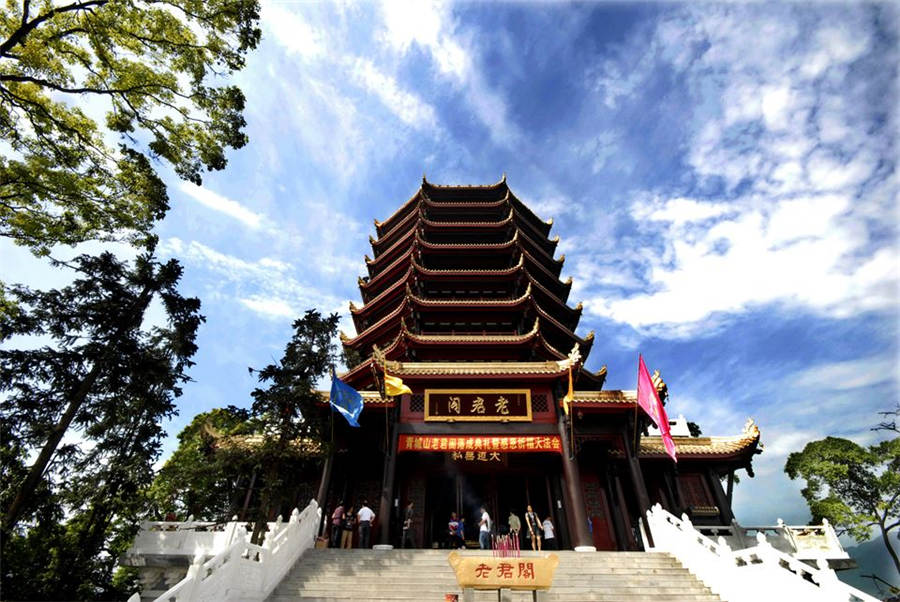
Qingcheng Mountain
Introduction
Qingcheng Mountain, located in Dujiangyan city, Sichuan province, China, is one of the most significant Taoist mountains and a UNESCO World Heritage Site. It is renowned for its rich history, spiritual importance, and stunning natural beauty. Known as a place of deep cultural significance, Qingcheng Mountain has been a sanctuary for those seeking both physical and spiritual solace for centuries.
Geographical Features
Situated approximately 70 kilometers northwest of Chengdu, Qingcheng Mountain is accessible and well-known for its picturesque landscapes. The mountain is a perfect blend of nature and culture, with lush greenery, tranquil hiking trails, and breathtaking autumn views that attract tourists year-round.
Historical Significance
As one of the cradles of Taoism, Qingcheng Mountain is a living "museum" of Taoist culture. It has been a center of Taoist practice for centuries, offering a peaceful retreat for self-cultivation and spiritual reflection. The mountain is home to famous temples like Quanzhen Temple, symbolizing the harmonious connection between spirituality and daily life. Qingcheng Mountain's historical significance is further highlighted by its link to key Taoist figures and teachings, with many ancient relics and manuscripts still preserved within its sacred grounds.
Taoist culture
Qingcheng Mountain is one of the birthplaces of Taoism. In the Eastern Han Dynasty (25-220), the Taoist religion was initiated by Zhang Daoling and developed ever since as an indigenous religion of China. It is part of Taoism in the larger sense, which is deeply inspired by the theory of Laozi in the Spring and Autumn Period (770-476 BC) and features the harmony of human and nature, the virtue of leisure and tranquility, and a positive attitude toward the occult and the metaphysical. The Taoist religion, which is concerned with the ritual worship of the Tao, has a profound influence upon Chinese life.
Qingcheng Mountain is a representative site of Taoist culture. Major religious sites here include the Natural Picture (a building complex immersed in nature), the Celestial Master's Cave, the Hall of the Ancestral Masters, Cave Facing the Sun and the Palace of Celestial Freshness.
Main Attractions
The Qingcheng Mountain hiking trail is a highlight, offering a scenic route lined with ginkgo trees, water pines, and lush vegetation. The trail leads visitors through stunning natural surroundings, with popular spots such as the Celestial Master's Cave, which is particularly beautiful in autumn. The 1,800-year-old ginkgo trees, ancient Taoist temples, and continuous incense smoke create a mystical atmosphere.
For those seeking tranquility, Yuecheng Lake offers a serene escape. The lake, enveloped in mist with ferry rides and changing colors of surrounding mountains, gives off a magical, Jiangnan-style misty effect, especially in autumn.
UNESCO World Heritage Recognition
Qingcheng Mountain was inscribed as a UNESCO World Heritage Site in 2000 alongside the Dujiangyan irrigation system. Its inclusion highlights the site's outstanding cultural and natural value, particularly in preserving Taoist heritage and its role in the development of ancient Chinese civilization. Qingcheng Mountain, with its blend of historical temples and stunning landscapes, stands as a testament to the enduring legacy of Taoism.
Activities and Experiences
Qingcheng Mountain offers a variety of activities, from trekking along scenic trails to participating in spiritual retreats in its temples. Visitors can immerse themselves in the Taoist culture through cultural events and festivals, experiencing the harmony between nature, spirituality, and tradition. Whether you're exploring its serene landscapes, seeking inner peace, or simply enjoying the autumn beauty, Qingcheng Mountain offers a profound and unforgettable experience.








